
Sacred Deer, Todai-ji Temple & Ancient Capital Flavors
Your essential guide to Nara Prefecture: Free-roaming sacred deer in Nara Park, Todai-ji's monumental Great Buddha, persimmon-leaf sushi (kaki-no-ha zushi), centuries-old Miwa somen, and Mount Yoshino's cherry blossoms.
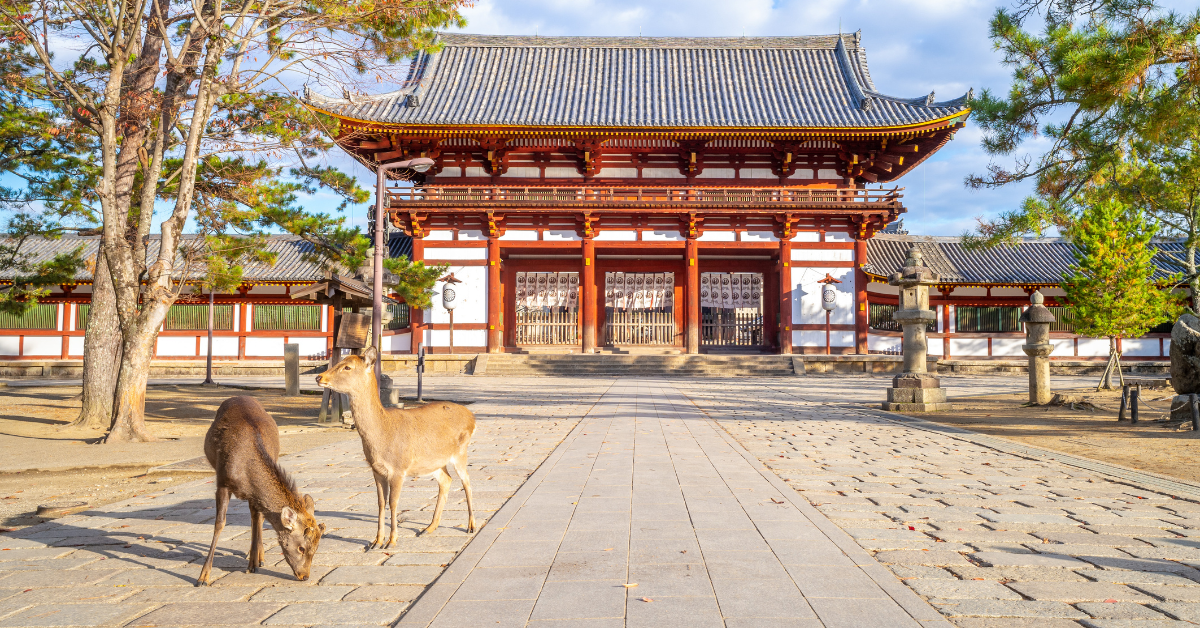
What to Expect From Nara
Nara was Japan's first permanent imperial capital (Heijo-kyo, 710–784 AD), laying the foundation of Japanese culture, Buddhism, and culinary traditions centuries before Kyoto rose to prominence. Today, Nara Prefecture pairs ancient spiritual grandeur with intimate town charms.
Beyond the famous park where more than 1,200 sacred sika deer bow for crackers, Nara contains eight UNESCO World Heritage monuments, Japan's finest bronze Great Buddha inside Todai-ji, centuries-old sake brewing origins, and the cherry-blossomed ridges of Mount Yoshino.
Nara Essentials Cheatsheet
Where to Stay in Nara
Choose your base between central temple access, lively merchant quarters, or scenic mountain retreats.
Kintetsu-Nara & Nara Park
MapThe most convenient tourist zone. Stepping out of the station puts you within a 5-minute walk of Nara Park deer, Kofuku-ji Pagoda, and the Higashimuki shopping arcade.
Naramachi Historic Quarter
MapNara's preserved Edo-period merchant neighborhood. Stay in restored wooden machiya townhouses, sample artisanal sake at Harushika, and dine in hidden courtyard bistros.
JR Nara Station Area
MapPacked with contemporary hotels (including onsen baths at Onyado Nono and Hotel Nikko Nara). Directly connected to JR lines bound for Kyoto, Osaka, and Kansai Airport.
Mount Yoshino (Yoshinoyama)
MapA tranquil UNESCO mountain retreat southern Nara. Famous for over 30,000 wild cherry blossom trees, historic pilgrimage ryokans, and mist-covered cedar temples.
Getting Around Nara
Click a tab below to explore trains from Osaka/Kyoto, rail passes, southern lines, and city buses.
Direct Trains: Osaka & Kyoto to Nara
Two major railway companies connect Kansai's hubs to Nara:
- Kintetsu Line from Osaka: Rapid Express trains run from Osaka-Namba to Kintetsu-Nara in 36 minutes (¥680). This drops you closest to Nara Park.
- JR Yamatoji Line from Osaka: Yamatoji Rapid trains run from JR Osaka (50 min, ¥820) or JR Tennoji (33 min, ¥490) directly to JR Nara Station (covered by JR Pass).
- Kintetsu Line from Kyoto: Direct Limited Express takes 35 minutes (¥1,280 reserved seat); standard Express takes 45 minutes (¥760).
- JR Nara Line from Kyoto: Miyakoji Rapid trains connect Kyoto Station to JR Nara Station in 45 minutes (¥720, covered by JR Pass).
Kintetsu Rail Passes & Discount Tickets
If you plan to explore both Nara and neighboring Osaka or Kyoto on the same day:
- Kintetsu Rail Pass 1-Day: Provides unlimited rides on Kintetsu train lines between Osaka-Namba, Kyoto, and Nara, plus designated Nara Kotsu buses (approx. ¥1,800).
- Kintetsu Rail Pass 2-Day: Adds extra regional coverage extending south toward Asuka and Yoshino for consecutive days of travel.
- JR Kansai Area Pass: Useful if you already hold a regional JR pass and plan to travel between Himeji, Kobe, Osaka, Kyoto, and JR Nara.
Traveling South to Yoshino & Ancient Asuka
Southern Nara holds Japan's earliest palace ruins and sacred mountain trails:
- To Mount Yoshino: Take the Kintetsu Yoshino Line from Kashiharajingu-mae or the deluxe retro-styled Blue Symphony sightseeing train directly to Yoshino Station (~1 hour 15 minutes).
- To Asuka Village: Take the Kintetsu Yoshino Line to Asuka Station (40 minutes from central Nara). Renting an electric bicycle directly outside Asuka Station is the easiest way to tour dispersed kofun tumuli and terraced rice paddies.
Local City Buses & Pedestrian Routes
Central Nara is one of the most pedestrian-friendly heritage zones in Japan:
- Walking Central Nara: Kofuku-ji, Nara Park, Todai-ji, Kasuga Taisha, and Naramachi form a contiguous, scenic walking corridor.
- Gurutto Bus: Convenient sightseeing loop buses that run every 15–20 minutes connecting Nara Park, the Prefectural Office, and Toshodai-ji/Yakushi-ji temples for a flat ¥100 fare.
- Nara Kotsu City Buses: Regular route buses accept ICOCA, Suica, and Pasmo. Tap your card when boarding and exiting.
What to Eat in Nara
Persimmon-leaf sushi, 1,200-year-old hand-pulled noodles, and legendary high-speed mochi.
Kaki-no-Ha Zushi (Persimmon Leaf Sushi)
MapNara’s iconic pressed sushi: cured mackerel or salmon over seasoned rice, wrapped in wild persimmon leaves. The leaves contain antibacterial tannins that preserve the fish and infuse the rice with a subtle, woody aroma. Unwrapped before eating.
Miwa Somen (Hand-Stretched Noodles)
MapHand-stretched in Sakurai’s Miwa district since the 8th century, Miwa somen is considered the ancestor of Japanese wheat noodles. Pulled into paper-thin threads, aged for firm springiness, and served chilled over ice in summer or warm in broth (nyumen) in winter.
Nakatanidou Yomogi Mochi
MapFamous worldwide for explosive, rhythmic high-speed wooden mallet pounding on Sanjo-dori. Freshly made hot mugwort (yomogi) mochi cakes are filled with sweet tsubu-an red bean paste and dusted in roasted soybean kinako powder (¥180 each).
Yamato Chagayu (Roasted Tea Porridge)
MapA comforting Buddhist staple consumed in Nara for over a thousand years. Premium rice is slowly simmered in fragrant roasted green tea (hojicha). Light, earthy, and soothing, it is traditionally served with local pickles and braised seasonal mountain vegetables.
Yamato Beef & Asuka Nabe Hot Pot
MapYamato Wagyu beef boasts a culinary record dating back to 1310. Pair it with Asuka Nabe—a 7th-century court stew made by simmering local chicken, seasonal greens, and tofu in a rich broth composed of milk, dashi, and white miso.
Narazuke (Sake Lees Pickles)
MapGourd (shirouri), cucumber, and watermelon repeatedly pickled in dense sake sediment (sake kasu) for up to three years. The resulting pitch-dark pickles have a glossy sheen, an intense umami punch, and a pleasantly sweet alcoholic aroma that pairs perfectly with white rice.
Landmarks Worth Your Time
Colossal wooden temples, lantern-lit shrine paths, and sacred ancient parks.
Todai-ji Temple & The Great Buddha (Daibutsu) Open in Maps +
The Daibutsuden (Great Buddha Hall) is one of the world's largest wooden structures, housing a 15-meter-tall bronze Vairocana Buddha cast in 752 AD. Walk through the monumental Nandaimon Gate guarded by fierce 8-meter Nio guardian statues sculpted by master craftsman Unkei.
Nara Park & Sacred Free-Roaming Deer Open in Maps +
Over 1,200 wild sika deer roam freely across 660 hectares of lawns, ponds, and maple groves. Designated as protected Natural Monuments, the deer have learned to bow their heads to visitors in exchange for official rice-bran crackers (shika senbei).
Kasuga Taisha Shrine & Stone Lanterns Open in Maps +
Nara’s premier Shinto shrine, established in 768 AD by the Fujiwara clan. The approach winds through a primeval forest bordered by 3,000 stone and hanging bronze lanterns, all illuminated simultaneously during the magical Setsubun and Chugen Mantoro festivals.
Kofuku-ji Temple & Five-Story Pagoda Open in Maps +
Located right at the threshold of Nara Park, Kofuku-ji’s 50-meter Five-Story Pagoda is Japan’s second tallest wooden pagoda and the landmark symbol of the city. Visit the National Treasure Museum inside to witness the famous three-faced, six-armed Ashura statue.
Yoshinoyama (Mount Yoshino Ridge) Open in Maps +
A sacred mountain in southern Nara famous since the Heian period. In spring, more than 30,000 cherry blossom trees bloom in progressive stages up the mountainside (Shimo, Naka, Kami, and Oku Senbon), centered around Kinpusen-ji, the head temple of Shugendo mountain asceticism.
Explore More of Nara
In-depth itineraries, street-food maps, and temple walking circuits.
Top Things to Do in Nara
A comprehensive day-trip itinerary covering the Great Buddha, secret garden teahouses, and Kasuga forest walks.
Read GuideNaramachi Food & Craft Trail
From Harushika sake tasting sets to artisan kaki-no-ha sushi shops and centuries-old sumi ink workshops.
Read GuideBrowse All Japan Guides
Explore food trails, neighborhood itineraries, and regional transit breakdowns across Kansai, Tokyo, and beyond.
Read GuideFrequently Asked Questions
How do I get to Nara from Osaka and Kyoto?
Is Kintetsu-Nara or JR Nara Station better for tourists?
How do I properly feed the deer in Nara Park?
What are the must-eat local food specialties in Nara?
What to Expect From Nara
Nara was Japan's first permanent imperial capital (Heijo-kyo, 710–784 AD), laying the foundation of Japanese culture, Buddhism, and culinary traditions centuries before Kyoto rose to prominence. Today, Nara Prefecture pairs ancient spiritual grandeur with intimate town charms.
Beyond the famous park where more than 1,200 sacred sika deer bow for crackers, Nara contains eight UNESCO World Heritage monuments, Japan's finest bronze Great Buddha inside Todai-ji, centuries-old sake brewing origins, and the cherry-blossomed ridges of Mount Yoshino.
Nara Essentials Cheatsheet
Where to Stay in Nara
Choose your base between central temple access, lively merchant quarters, or scenic mountain retreats.
Kintetsu-Nara & Nara Park
MapThe most convenient tourist zone. Stepping out of the station puts you within a 5-minute walk of Nara Park deer, Kofuku-ji Pagoda, and the Higashimuki shopping arcade.
Naramachi Historic Quarter
MapNara's preserved Edo-period merchant neighborhood. Stay in restored wooden machiya townhouses, sample artisanal sake at Harushika, and dine in hidden courtyard bistros.
JR Nara Station Area
MapPacked with contemporary hotels (including onsen baths at Onyado Nono and Hotel Nikko Nara). Directly connected to JR lines bound for Kyoto, Osaka, and Kansai Airport.
Mount Yoshino (Yoshinoyama)
MapA tranquil UNESCO mountain retreat southern Nara. Famous for over 30,000 wild cherry blossom trees, historic pilgrimage ryokans, and mist-covered cedar temples.
Getting Around Nara
Click a tab below to explore trains from Osaka/Kyoto, rail passes, southern lines, and city buses.
Direct Trains: Osaka & Kyoto to Nara
Two major railway companies connect Kansai's hubs to Nara:
- Kintetsu Line from Osaka: Rapid Express trains run from Osaka-Namba to Kintetsu-Nara in 36 minutes (¥680). This drops you closest to Nara Park.
- JR Yamatoji Line from Osaka: Yamatoji Rapid trains run from JR Osaka (50 min, ¥820) or JR Tennoji (33 min, ¥490) directly to JR Nara Station (covered by JR Pass).
- Kintetsu Line from Kyoto: Direct Limited Express takes 35 minutes (¥1,280 reserved seat); standard Express takes 45 minutes (¥760).
- JR Nara Line from Kyoto: Miyakoji Rapid trains connect Kyoto Station to JR Nara Station in 45 minutes (¥720, covered by JR Pass).
Kintetsu Rail Passes & Discount Tickets
If you plan to explore both Nara and neighboring Osaka or Kyoto on the same day:
- Kintetsu Rail Pass 1-Day: Provides unlimited rides on Kintetsu train lines between Osaka-Namba, Kyoto, and Nara, plus designated Nara Kotsu buses (approx. ¥1,800).
- Kintetsu Rail Pass 2-Day: Adds extra regional coverage extending south toward Asuka and Yoshino for consecutive days of travel.
- JR Kansai Area Pass: Useful if you already hold a regional JR pass and plan to travel between Himeji, Kobe, Osaka, Kyoto, and JR Nara.
Traveling South to Yoshino & Ancient Asuka
Southern Nara holds Japan's earliest palace ruins and sacred mountain trails:
- To Mount Yoshino: Take the Kintetsu Yoshino Line from Kashiharajingu-mae or the deluxe retro-styled Blue Symphony sightseeing train directly to Yoshino Station (~1 hour 15 minutes).
- To Asuka Village: Take the Kintetsu Yoshino Line to Asuka Station (40 minutes from central Nara). Renting an electric bicycle directly outside Asuka Station is the easiest way to tour dispersed kofun tumuli and terraced rice paddies.
Local City Buses & Pedestrian Routes
Central Nara is one of the most pedestrian-friendly heritage zones in Japan:
- Walking Central Nara: Kofuku-ji, Nara Park, Todai-ji, Kasuga Taisha, and Naramachi form a contiguous, scenic walking corridor.
- Gurutto Bus: Convenient sightseeing loop buses that run every 15–20 minutes connecting Nara Park, the Prefectural Office, and Toshodai-ji/Yakushi-ji temples for a flat ¥100 fare.
- Nara Kotsu City Buses: Regular route buses accept ICOCA, Suica, and Pasmo. Tap your card when boarding and exiting.
What to Eat in Nara
Persimmon-leaf sushi, 1,200-year-old hand-pulled noodles, and legendary high-speed mochi.
Kaki-no-Ha Zushi (Persimmon Leaf Sushi)
MapNara’s iconic pressed sushi: cured mackerel or salmon over seasoned rice, wrapped in wild persimmon leaves. The leaves contain antibacterial tannins that preserve the fish and infuse the rice with a subtle, woody aroma. Unwrapped before eating.
Miwa Somen (Hand-Stretched Noodles)
MapHand-stretched in Sakurai’s Miwa district since the 8th century, Miwa somen is considered the ancestor of Japanese wheat noodles. Pulled into paper-thin threads, aged for firm springiness, and served chilled over ice in summer or warm in broth (nyumen) in winter.
Nakatanidou Yomogi Mochi
MapFamous worldwide for explosive, rhythmic high-speed wooden mallet pounding on Sanjo-dori. Freshly made hot mugwort (yomogi) mochi cakes are filled with sweet tsubu-an red bean paste and dusted in roasted soybean kinako powder (¥180 each).
Yamato Chagayu (Roasted Tea Porridge)
MapA comforting Buddhist staple consumed in Nara for over a thousand years. Premium rice is slowly simmered in fragrant roasted green tea (hojicha). Light, earthy, and soothing, it is traditionally served with local pickles and braised seasonal mountain vegetables.
Yamato Beef & Asuka Nabe Hot Pot
MapYamato Wagyu beef boasts a culinary record dating back to 1310. Pair it with Asuka Nabe—a 7th-century court stew made by simmering local chicken, seasonal greens, and tofu in a rich broth composed of milk, dashi, and white miso.
Narazuke (Sake Lees Pickles)
MapGourd (shirouri), cucumber, and watermelon repeatedly pickled in dense sake sediment (sake kasu) for up to three years. The resulting pitch-dark pickles have a glossy sheen, an intense umami punch, and a pleasantly sweet alcoholic aroma that pairs perfectly with white rice.
Landmarks Worth Your Time
Colossal wooden temples, lantern-lit shrine paths, and sacred ancient parks.
Todai-ji Temple & The Great Buddha (Daibutsu) Open in Maps +
The Daibutsuden (Great Buddha Hall) is one of the world's largest wooden structures, housing a 15-meter-tall bronze Vairocana Buddha cast in 752 AD. Walk through the monumental Nandaimon Gate guarded by fierce 8-meter Nio guardian statues sculpted by master craftsman Unkei.
Nara Park & Sacred Free-Roaming Deer Open in Maps +
Over 1,200 wild sika deer roam freely across 660 hectares of lawns, ponds, and maple groves. Designated as protected Natural Monuments, the deer have learned to bow their heads to visitors in exchange for official rice-bran crackers (shika senbei).
Kasuga Taisha Shrine & Stone Lanterns Open in Maps +
Nara’s premier Shinto shrine, established in 768 AD by the Fujiwara clan. The approach winds through a primeval forest bordered by 3,000 stone and hanging bronze lanterns, all illuminated simultaneously during the magical Setsubun and Chugen Mantoro festivals.
Kofuku-ji Temple & Five-Story Pagoda Open in Maps +
Located right at the threshold of Nara Park, Kofuku-ji’s 50-meter Five-Story Pagoda is Japan’s second tallest wooden pagoda and the landmark symbol of the city. Visit the National Treasure Museum inside to witness the famous three-faced, six-armed Ashura statue.
Yoshinoyama (Mount Yoshino Ridge) Open in Maps +
A sacred mountain in southern Nara famous since the Heian period. In spring, more than 30,000 cherry blossom trees bloom in progressive stages up the mountainside (Shimo, Naka, Kami, and Oku Senbon), centered around Kinpusen-ji, the head temple of Shugendo mountain asceticism.
Explore More of Nara
In-depth itineraries, street-food maps, and temple walking circuits.
Top Things to Do in Nara
A comprehensive day-trip itinerary covering the Great Buddha, secret garden teahouses, and Kasuga forest walks.
Read GuideNaramachi Food & Craft Trail
From Harushika sake tasting sets to artisan kaki-no-ha sushi shops and centuries-old sumi ink workshops.
Read GuideBrowse All Japan Guides
Explore food trails, neighborhood itineraries, and regional transit breakdowns across Kansai, Tokyo, and beyond.
Read Guide